
Turning 18 is a major event for most teenagers because of the great freedom and responsibility that comes with this milestone, but if you’re anything like me, you might be more nervous than excited.
I remember staring at my dresser the morning I turned 18 and thinking, I don’t even have any clothes an adult would wear…I’m not ready for all this. Everything I thought was expected of me seemed like so much.
As a child, I had been ahead of my peers intellectually. As an adult, I already felt behind on day one. I wished aloud that there was a manual or training guide of things an adult should know.
So, drawing from my own coming-of-age experience, discussions with young adults ranging in age from 14 through 22, and talking with my parents, here are 18 things that 18-year-olds should know.
1. Personality, identity, and self-worth.
It’s easy to think our worth is tied up in things like how we dress, how much eyeliner we wear, the way we talk, what we post on social media, what music/books/tv shows we enjoy, what gender we identify as, how many friends we have, what we do for work… The list goes on and on.
The problem with that is those things can fail us. As new adults, things can change so drastically, and we’re called to put childish things away.
This can be difficult for the young adult that’s tied up his or her self-worth in something that is now in the past. Our true identity is found in who we are as human beings made in the image of God and loved by Jesus Christ.
2. Humble confidence
It takes confidence to be humble. Society pushes “self-confidence,” but the line between self-confidence and pride is fuzzy. But a confidence grounded in humility? Now that’s a different story.
Personally, I swing between arrogance and assuming nobody likes me. Both extremes are self-focused and unhealthy. Humble confidence says “I am not perfect, but that’s okay.” Humble confidence involves knowing that everybody’s just as insecure as I am.
Laughing at one’s own harmless mistakes makes awkward situations less so, and demonstrates to others that clumsy mistakes add a certain spice to life.
3. A focus on others and a servant’s heart.
I have consistently found that thinking about myself makes me miserable, and helping others makes me happy.
Many times, in my house, helping others involves washing dishes and cleaning bathrooms.
Other times, it involves anticipating someone’s needs and preparing to meet them. For example, at the wedding of a friend, I noticed the bow on her dress was coming undone. When a discreet opportunity presented itself, I quietly let her know and offered to re-tie it.
Small acts of service like that bless the hearts of the giver and the recipient. Sometimes teens have to give up what they want, like being the center of attention, or sitting down and putting their feet up. But the rewards come back exponentially bigger, and I eventually learned to enjoy doing the dishes.
4. Knowing what’s important.
One of the biggest differences I’ve observed between mature and immature people is knowing what’s important. Immature people fill their time and conversation with petty, unimportant things. Mature people know how to prioritize what’s important in the long run.
That’s not to say things like resting, enjoying the small things, and having fun are not important. They just need to be prioritized correctly and not take over all of a person’s time. One could say the same for work as well.
5. A victim mindset is a self-fulfilling prophecy+
I spent a long time with a victim mindset… “Because this happened to me, and my brain is like this, and the world is like that, I deserve all the free passes/help/sympathy for being obnoxious.”
Did that make my life better? No.
It kept me focused on the can’ts and don’t-haves and shouldn’t-have-tos. When everybody starts to think this way, more victims are created because nobody has to take responsibility for their actions—they’re all just victims.
It’s a self-fulfilling prophecy. It becomes a cycle, even a generational one.
In my life, my victim mindset affected my view on relationships — especially family relationships, career, and self-worth. But when I learned to accurately evaluate my situation, I learned there were a lot of things I could do.
I also learned that there are a lot of other people who struggle with the same stuff I do.
And I learned that if I continued to let what happened to me in the past define me, I would miss out on the incredible future God has planned for me. (Jeremiah 29:11)
6. But it is okay to ask for help
Asking for help is not being a victim. There are some things I can’t do on my own. Or maybe I can do them, but it’s beneficial, for some reason, to let others do them.
Much of human interaction revolves around the concept of interdependence. This is the mid-point between dependence, expecting others to do everything for you, and independence, expecting yourself to be able to do everything.
Interdependence is the concept of give and take, and giving grace when people need it. Because everybody has different skills and are at different places in life.
I might give a friend encouragement and support one day, and a week later, she’ll say the exact same thing back to me. This is the beauty of community, one of the most poignant parts of the human experience.
7. Dating, marriage, and children.
When interviewing young adults, a lot of them expressed interest in relationships. Several young men and women said they wanted to have some idea of who they would marry by the time they turned 18, or, at least, whether or not they wanted to get married. They also wondered about having children and what their families would look like.
Personally, over the space of two and a half years, my views on relationships, marriage, and children have changed drastically—multiple times. I attribute this to studying more of what the Bible says on the subject, which has helped me grow in maturity. My views have also been impacted by experience.
To illustrate, I started dating at 16 and had all these ideas about what I wanted our life together to look like, what I wanted my family to look like, etc. I didn’t really want kids; I saw them as a burden and believed I wouldn’t be a good mother. (Again, I was only sixteen. Personally, I hadn’t experienced enough life to be a good mother.) When I broke up with my boyfriend at 18, I was convinced I never wanted to get married.
Currently, I still have no idea what my future holds in terms of dating, marriage, and children. I just know I’m no longer holding tightly to any of my ideas of what I want and am waiting for God’s guidance.
If He calls me to be a wife and mother some day, I know He will provide the ability and maturity. If He doesn’t, well then, I’ll be happily single. Either way, my goal is to serve Him and live my life for His glory.
My advice for all teens, single or dating, is to listen to God and to be prepared to let go of his or her wants and expectations.
8. Biblical view on roles of men and women in church
About the same time I was learning what I believed about marriage and family, I also became more aware of the role of men and women in the church.
When I was younger, I thought ideas of women being quiet in church, modest, submissive, etc. were controlling and old-fashioned, and didn’t expect to follow them when I became a grown-up.
Hah! I couldn’t have been more wrong. God provided many opportunities for me, even as a teen, to see how working in the home, taking care of children, and obeying Biblical mandates for women actually empower women.
Men and women have equal value in the eyes of God, but they have different roles. Adhering to these roles as laid out in Scripture leads to harmony and freedom in the proper area of influence.
I believe a woman’s priority is to be a homemaker, helper, and caregiver (1 Timothy 5:14, Genesis 2:18, 1 Timothy 5:16), while a man’s priority is to be a leader and defender (1 Timothy 3:2, Ephesians 5:25). But both are supposed to lead a quiet, peaceful life, one that is “godly and dignified in every way.” (1 Timothy 2:2 [ESV])
This might seem like some far away thing, especially for teens living with their parents, but it is a mindset that teens can still practice and benefit from right now, by following in the footsteps of older men and women who are setting good examples like:
- -serving in his or her church.
- -contributing to his or her family’s well being and unity.
- honoring God in his or her career.
- -promoting peace rather than stirring up strife.
- -staying grounded in the truth of scriptures and passing it on to the next generation.
Being a homemaker takes grit and ingenuity, and all the returns of this investment profit the homemaker and her family, not some faceless corporation. And if, like younger me, a woman fears her efforts inside the home aren’t worth as much because nobody sees them… it’s not true.
Proverbs 31:28 says, “her children rise up and call her blessed; her husband also, and he praises her.” Her diligent work provides a beautiful example to church members, unbelievers, and her own children.
All the young men out there have a responsibility as well. They are called to be leaders and contribute as well. A few of the young men at my church are involved in roles such as usher or, like one eleven-year old boy, serving communion. I feel grateful that the young men are taking responsibility and participating in the service.
9. Laundry
Young adults should know how to sort & fold laundry, and how to operate a washer & dryer. This kind of self-sufficiency empowers people. It also inspires confidence and a good work ethic.
Additionally, clothes are an expression of personality that speak volumes about an individual. Consider what one’s clothes portray if they give off an offensive odor, or are wrinkled, stained and dirty?
Sometimes laundry isn’t fun, especially if I’ve let it pile up to the point of stressing me out or have forgotten to take my clothes out of the dryer for the umpteenth time. But I can choose to have a good attitude and use tools—like timers—to remind me to grab my laundry, start some music or a podcast, and fold my clothes.
10. Cooking
Like laundry, cooking is another domestic skill that many people think is drudgery and try to escape through eating out and paying for food delivery.
But when one considers the great cultural significance of food—it’s strongly associated with hospitality and holidays and all things humans hold as important—one can see it’s a crucial part of the human experience.
By knowing how to cook, people can take care of themselves and help others.
One doesn’t have to be a chef; the beautiful thing about learning to cook is there are dishes for every skill level. My mother wants her children to be able to prepare simple dinners. She believes it’s especially important to be able to cook basic meats, like ground beef, chicken, and fish.
Additionally, learning basic kitchen safety is important, such as proper use and storage of knives, how to handle hot objects, and how to prevent cross contamination of raw foods.
These skills will equip a young person to feed unexpected guests, bring a dish to a potluck, or help out a struggling friend.
11. Medical procedures and health insurance
Shortly before my 18th birthday, my state mailed me an 86 page packet of forms to fill out about my health insurance. Without realizing it, I panicked and started taking out my stress on my family.
Thankfully, my mom caught on, stepped in, and confiscated the packet. Later, she helped me get everything sorted out, but getting medical and health insurance stuff sorted out can be a hassle.
Once a person turns 18, it’s up to them to take the initiative. However, I definitely recommend asking parents or guardians for help. They’ve had 18+ more years of experience.
This article helps explain some of the different places a young adult can secure health insurance. It’s a good idea to start looking into this before turning 18.
12. Car maintenance
A recurring theme when I spoke to young people about growing up was the desire to learn how to drive and own a car. A car is not just a car; it is a way to do things independently—like work a job, volunteer, go to the store, and hang out with friends. It’s freedom on four wheels.
But, for the ones who aren’t mechanically inclined, a car can be a mysterious universe of problems involving mysterious words like the transmission, the carburetor, or brake calipers. (These words often translate into large numbers followed by dollar signs, if you catch my drift.)
My parents required me to learn how to jumpstart a dead battery, change a flat tire, check the oil, and navigate using paper maps before I was allowed to get my license. These are helpful skills for everyone to know.
Another thing that has come in handy with my car is a dedicated amount of money set aside that covers gas and repairs. I budget for gas each month and add money to the car fund to cover repairs.
13. Finances
A young adult should know how to manage their own finances. This includes paying bills on time and budgeting income. A source of dependable income (like a traditional job) makes this much easier, but if one’s income is sporadic, it’s even more crucial to budget wisely.
A young adult should be aware of what things cost, and estimate his or her incoming expenses. This will help them make decisions like “should I splurge on X?” or “should I pick up extra shifts at work?”
This isn’t easy for me, especially since I often let receipts and pay stubs pile up without entering them into my records. I often find myself squinting at a column of numbers wondering where an expense came from or why something’s not lining up.
While I may never become an accountant, it’s still important for me to keep an eye on my finances, for no other reason than it’s important for my next topic: Taxes.
14. Taxes
The issue of taxes came up over and over again in my interviews with young adults. For citizens of a country that declared independence in part because of taxation without representation, we don’t talk much about how to file taxes.
It would have been helpful for me to have a checklist of things to do to file my first tax return, something like this:
- -know whether or not one has to pay income taxes—it’s not actually based on age, it’s based on income over the last year. If one makes over a certain amount, then he or she has to file a tax return.
- have a record of total income received in the last year. (This is where a W2 and personal income records come in handy. A social security number is also required.
- find out when taxes are due.
- fill out the federal tax return. (Some libraries offer help and/or resources with state or federal taxes.)
- fill out the state tax return. This is simply asking for information from the federal tax return.
- mail the tax returns to the proper addresses.
15. Voting
Like paying taxes, voting is a civic duty. In some countries, it’s even required.
Not long after I earned my driver’s license, my state mailed me a form to register for a political party: Republican, Democrat, or Independent. Independent is the default, so there’s no requirement to mail the form back.
However, if one selects a party, one can vote in election primaries. Primaries are where voters can narrow down which candidate from their party should run in the general election.
Any registered voter, Republican, Democrat, or Independent can vote in a general election, and they can vote for any candidate they choose, regardless of party.
Some people don’t choose to vote because they don’t believe their vote makes a difference, because they don’t agree with any of the candidates, or don’t know enough about politics to decide what they support.
My point of view is that voting is “giving to Caesar what is Caesar’s,” and that being educated and participating in elections is important for civic if not religious reasons.
Of course, my religious views affect who I vote for, but I don’t believe politics should affect my religion. For example, I wouldn’t cause strife with a church member because they voted differently.
Each teen should think through what he or she believes when it comes to politics.
16. College and career
In the board game, Life, players are required to pick either the College Path or the Career Path at the beginning of the game. This is a major decision that young people have to make in real life as well.
There are a lot of moving pieces, like: what do I want to do as an adult? How can I get there? Do I want to go to college? If so, which one? How will I pay for it?
Advice I heard quite a bit was to “let God direct your steps.” Great advice, but I was too stressed to listen to God. From what I know now, what would I tell someone who’s thinking about their career and college?
- An individual can always change their mind and head in a new direction.
- There’s not just one right path to take, there are many different ways to end up where one wants to be.
- Start sooner than I did, (senior year). I recommend collecting information about colleges and scholarships during the sophomore and junior years of high school.
17. Tools of personal responsibility
A huge, huge part of growing up is taking personal responsibility for things. Some strategies to accomplish what you want include self-motivation, accountability, and consistency.
- Self motivation: knowing what one wants to accomplish and why. Have tools (like a weekly planner) and incentives for getting things finished.
- Accountability: letting people know what you are trying to accomplish and inviting them to check up on you. This works best when it goes both ways.
- Consistency: This is a concept that adds up over time as you put in the effort a little each day. It is much better than putting something off and occasionally working on it until exhaustion.
18. Enjoy all aspects of the human experience.
The human experience is a concept that I came across during one of many difficult periods. I was struggling with my identity, dealing with the painful end of a relationship, and wondering if I would ever be able to lead a normal life when my brain chemistry was so different from everyone else’s.
The human experience is knowing and accepting the truth of the world we live in: created as “good” but fallen through sin.
The truth of human nature: desperately wicked and unable to do good works on our own, yearning for something eternal but easily distracted by all that’s temporal.
But there is hope.
The human experience is everything from stepping in dog poop to falling in love. By being rooted in God’s truth and peace, we can learn to enjoy the journey of life—the human experience.
Through God, we can prioritize the right things, choose a positive attitude, and have a servant’s heart.
Final thoughts
A while back, my parents and I had a conversation about expectations. I assumed that they expected of me what I expected of myself. They clearly thought differently, which had led to friction in our communication.
“What do you expect of me?” I asked them, realizing I didn’t actually know the answer.
“To love mercy, act justly, and walk humbly before your God,” my dad answered.
“That’s all?” I recall saying. Yes, that was all. But really, everything important was summed up in that verse: “He has shown you, O man, what is good; and what does the Lord require of you but to do justly, to love mercy, and to walk humbly with your God?” (Micah 6:8, NKJV)
Yes, that’s all.
So, everything I’ve talked about here, as helpful and practical as I hope it is to you, is nothing if it’s not an outpouring of your walk with God.

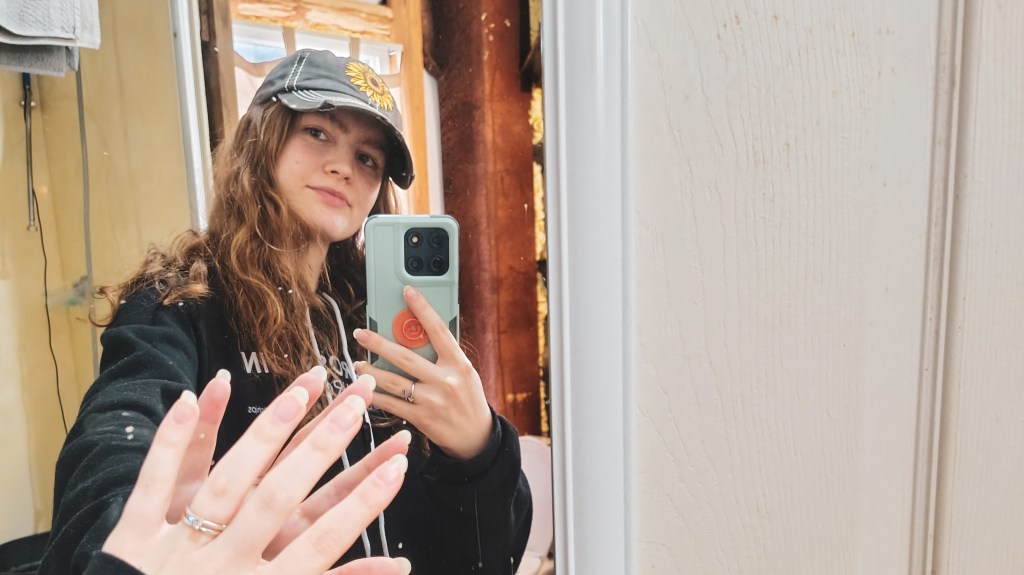
D. E. Flaming is a passionate young writer from the West Coast who loves perfectly sharpened pencils, random facts, and indie music. She writes informational articles, with the occasional fiction project. When not writing, she’s making lists, sewing, drawing, talking to interesting people, and blogging on her blog Flight Patterns.
Link tree: https://linktr.ee/desireeflaming?subscribe








 Sunshine in the Haze
Leave a comment